Water, Coffee, Juice or Soda: Comparing Your Everyday Drinks
How water, unsweetened coffee and tea, 100% juice and sugary soda compare on added sugar, hydration and their place in a balanced day, using CDC and NHS advice.
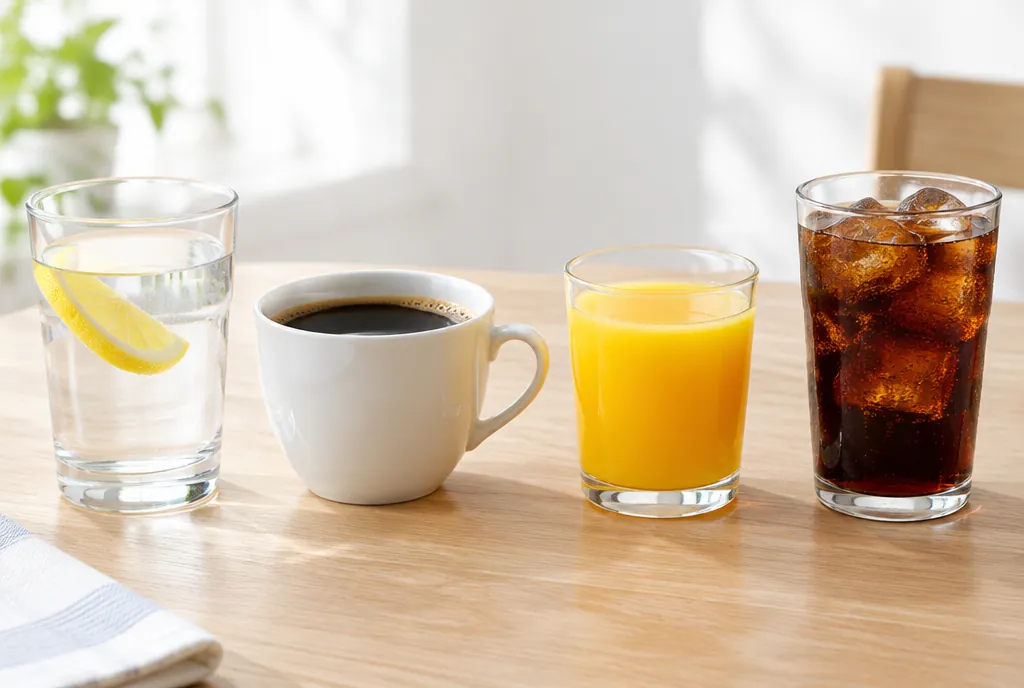 AI image
Side by side
| Criteria | Water | Unsweetened coffee or tea | 100% fruit juice | Sugary soda |
|---|---|---|---|---|
| Added sugar | None | None, unless you add sugar or syrup | No added sugar, but high in sugars from fruit | High |
| Calories | None | Very low when plain | Moderate | Moderate to high, with little nutritional value |
| Counts toward daily fluids | Yes | Yes | Yes | Yes, but best kept occasional |
| Things to watch | Nothing for most people | Caffeine: up to 400 mg a day for most adults; less in pregnancy | Portion size and sugar | Added sugar and effect on teeth |
| Place in a balanced day | Main everyday drink | Fine in moderation | One small glass (150 ml), with a meal | Occasional treat |
What we drink can quietly add up over a day. A coffee on the way to work, a juice with lunch, a soda in the afternoon: each choice is small, but together they shape how much sugar and how many calories you take in, as well as how well hydrated you feel. This comparison looks at four common options and how each can fit into a balanced day.
Why drinks matter
The CDC notes that getting enough water every day is important for health. At the same time, many popular drinks contain sugar that is easy to overlook because it does not fill you up the way food does.
According to the CDC, the leading sources of added sugars in the US diet are sugar-sweetened beverages, desserts and sweet snacks. Too much added sugar can contribute to health problems such as weight gain and obesity, type 2 diabetes and heart disease.
How much should you drink?
The NHS suggests 6 to 8 cups or glasses of fluid a day as a general guide. You may need more if you are pregnant or breastfeeding, in hot weather, very active, or unwell. Water, lower-fat milk and lower-sugar drinks, including tea and coffee, all count toward that total.
What the current guidance says about added sugars
The CDC's summary of the current Dietary Guidelines for Americans states that no amount of added sugars or non-nutritive sweeteners is recommended as part of a healthy diet. Children younger than 11 should not have any added sugar, and adolescents and adults should limit added sugars to no more than 10 grams per meal.
Added sugars include sugars and syrups added during processing, honey, and sugars from concentrated fruit or vegetable drinks. They do not include the sugars found naturally in milk, vegetables and whole fruit. Checking the Nutrition Facts label for "Added Sugars" is the easiest way to see how much a drink contains.
Water
Plain water is the most straightforward choice. It has no calories and no sugar, and the CDC points out that replacing sugary drinks with plain water can help reduce calorie intake. Harvard's Nutrition Source calls water the best choice for quenching your thirst.
If plain water feels boring, the CDC suggests adding a wedge of lemon or lime, carrying a reusable water bottle, and serving water with meals.
Unsweetened coffee and tea
Plain coffee and tea are low in calories and count toward your daily fluids, according to the NHS. Harvard's Nutrition Source describes coffee and tea without added sweeteners as healthy choices.
The main things to watch are caffeine and what you add. The CDC says moderate caffeine, up to 400 mg a day, can be part of a healthy diet for most adults, which is about 2 to 3 cups of plain coffee. The NHS advises keeping caffeine below 200 mg a day during pregnancy. For better sleep, the CDC also suggests avoiding caffeine in the afternoon or evening.
Flavored syrups, whipped cream and sweetened coffee-shop drinks change the picture: the CDC lists sweetened coffee and tea among sugary drinks.
100% fruit juice
The CDC notes that limited amounts of 100% fruit juice contain important nutrients. However, the NHS points out that fruit juice and smoothies are high in sugar, and suggests limiting them to a maximum of one small glass (150 ml) a day, drunk with a meal. Harvard's Nutrition Source similarly suggests one small glass a day.
The CDC also reminds us to enjoy juice within recommended calorie limits, so it works best as a small part of a meal rather than a drink to quench thirst.
Sugary soda and other sweetened drinks
Regular soda, fruit drinks, sports and energy drinks, sweetened waters and sweetened coffee and tea contain calories but little nutritional value, according to the CDC. The NHS advises against having high-sugar drinks too often, because they are higher in calories and can damage teeth, and Harvard's Nutrition Source recommends generally avoiding sugary drinks like soda.
This does not mean a soda can never be part of your life. It means it works best as an occasional drink rather than a daily habit.
What about diet drinks?
Diet and sugar-free drinks use low- or no-calorie sweeteners. The CDC notes these sweeteners may reduce calorie intake in the short term, but there are open questions about their long-term role in weight management. Harvard's Nutrition Source suggests having them in moderation. For many people they can be a stepping stone from regular soda toward water.
Simple swaps to try
- Keep a filled water bottle on your desk or in your bag.
- If you drink soda daily, replace one serving with sparkling water and a slice of lemon.
- Order coffee and tea plain or lightly sweetened, and reduce added sugar gradually.
- Enjoy juice as one small glass with breakfast rather than as a drink to quench thirst.
If you have diabetes, kidney disease, heart failure or another condition that affects how much or what you can drink, follow the advice of your doctor or dietitian, as your needs may differ from general guidance.
Pros and cons
Water
No calories and no sugar. The simplest drink for everyday hydration and the CDC's suggested swap for sugary drinks.
Pros
- No calories or sugar
- Inexpensive and widely available
- Easy to flavor with lemon, lime or cucumber
Cons
- Some people find plain water less appealing at first
Unsweetened coffee or tea
Low in calories when plain and counts toward daily fluids, according to the NHS. Caffeine is the main thing to keep in check.
Pros
- Very low in calories without added sugar
- Counts toward daily fluid intake
- Many varieties to enjoy hot or iced
Cons
- Caffeine can affect sleep, especially later in the day
- Sweetened versions and coffee-shop drinks can contain a lot of added sugar
100% fruit juice
Provides some nutrients but is high in sugar, so the NHS suggests limiting juice and smoothies to one small glass (150 ml) a day, with a meal.
Pros
- Contains some nutrients from fruit
- No added sugar when it is 100% juice
Cons
- High in sugar
- Easy to drink more than one small glass
Sugary soda
Contains calories but little nutritional value, and sugar-sweetened drinks are a leading source of added sugars. Best kept for occasional use.
Pros
- Can be enjoyed occasionally as a treat
Cons
- High in added sugar
- Adds calories without filling you up
- Can damage teeth
Frequently asked questions
Do coffee and tea count toward my daily fluids?
Yes. The NHS says lower-sugar drinks, including tea and coffee, count toward your daily fluid intake. Keep caffeine moderate.
Is 100% fruit juice a healthy choice?
It contains some nutrients, but it is high in sugar. The NHS suggests no more than one small glass (150 ml) of juice or smoothie a day, ideally with a meal.
How much water should I drink a day?
Needs vary. The NHS gives 6 to 8 cups or glasses of fluid a day as a general guide, and you may need more in hot weather, when active, or when unwell.
This article is general education, not personal medical advice. If you have a health condition or take medication, check with a doctor or registered dietitian before making big changes. Health disclaimer
Sources
- CDC — About Water and Healthier Drinks cdc.gov
- CDC — Get the Facts: Added Sugars cdc.gov
- NHS — Water, drinks and hydration nhs.uk
- Harvard T.H. Chan School of Public Health, The Nutrition Source — Healthy Drinks nutritionsource.hsph.harvard.edu
- CDC — About Sleep cdc.gov
We link to health institutions, published guidelines and original research. See our editorial policy.
Recipes
Put it on your plate
-
Dinner
-
Dinner
-
Snacks
-
Dinner