Small Habits That Stick: What Research Says About Change
How habits really form, why it often takes weeks rather than days, and simple ways to start small, link new habits to cues and keep going after a missed day.
 AI image
Most of us have started a new routine with plenty of energy, only to find it fading a few weeks later. That is not a personal failing. It usually means the new behavior has not yet become a habit, and habits take time and repetition to form. The good news is that research gives us a fairly clear picture of how that process works, and it favors small, steady steps over dramatic changes.
What a habit actually is
In psychology, a habit is an action that is triggered more or less automatically by a familiar situation. You walk into the kitchen in the morning and reach for the kettle without thinking about it. The situation (a time, a place or something you just did) acts as a cue, and the action follows.
This is why willpower alone is a tiring way to change behavior. When something is still a conscious decision, it competes with everything else on your mind. When it becomes a habit, it takes much less effort.
How long does it take to form a habit?
A study led by researcher Phillippa Lally, published in the European Journal of Social Psychology, followed 96 volunteers in real life for 12 weeks. Each person chose one healthy eating, drinking or activity behavior, such as eating a piece of fruit with lunch or going for a walk, and did it daily in the same context. Every day they rated how automatic the behavior felt.
For most people with enough data, automaticity rose quickly at first and then leveled off, like a curve that flattens over time. The time it took to get close to that plateau varied enormously: from 18 to 254 days. A later article by the same research group summarized that, on average, automaticity leveled off at around 66 days, with considerable variation between people and between behaviors.
So the popular idea that a habit forms in 21 days is not what this research found. A more realistic expectation is several weeks to a few months, and it may be shorter for simple actions and longer for more demanding ones.
Start smaller than you think you need to
The same research group advises aiming for small, manageable changes, partly because failing at an ambitious goal can be discouraging. They also note that simpler actions tend to become habitual more quickly.
In practice, that might look like:
- Adding one portion of vegetables to dinner, rather than overhauling every meal.
- Taking a 10-minute walk after lunch, rather than committing to an hour at the gym.
- Putting a glass of water next to the kettle and drinking it before your morning coffee.
- Going to bed 15 minutes earlier, rather than trying to change your whole evening at once.
Once a small action feels automatic, you can build on it. A short walk can become a longer one. One extra vegetable can become two.
Give your habit a cue
Because habits are triggered by situations, it helps to choose a clear cue. The researchers suggest picking a time and place you encounter every day, or tying the new action to something that is already part of your routine.
Some people call this "habit stacking": attaching the new behavior to an existing one. For example:
- After I pour my morning coffee, I will fill my water bottle.
- After I park the car at work, I will take the stairs.
- After I clear the dinner plates, I will prepare tomorrow's lunch.
The more consistent the cue, the better. In the Lally study, people who performed their chosen behavior more consistently tended to show the clearest pattern of habit formation.
Missing a day does not ruin your progress
This is one of the most reassuring findings. In the study, missing a single opportunity to perform the behavior did not materially affect the habit formation process. The research group later described how gains in automaticity soon resumed after one missed day.
In other words, a busy Tuesday or a weekend away does not send you back to zero. What matters is returning to the routine the next time the cue comes around. The "all or nothing" mindset, where one slip leads to giving up entirely, is more of a threat than the slip itself.
Make it easy to keep going
A few practical ideas help habits settle in:
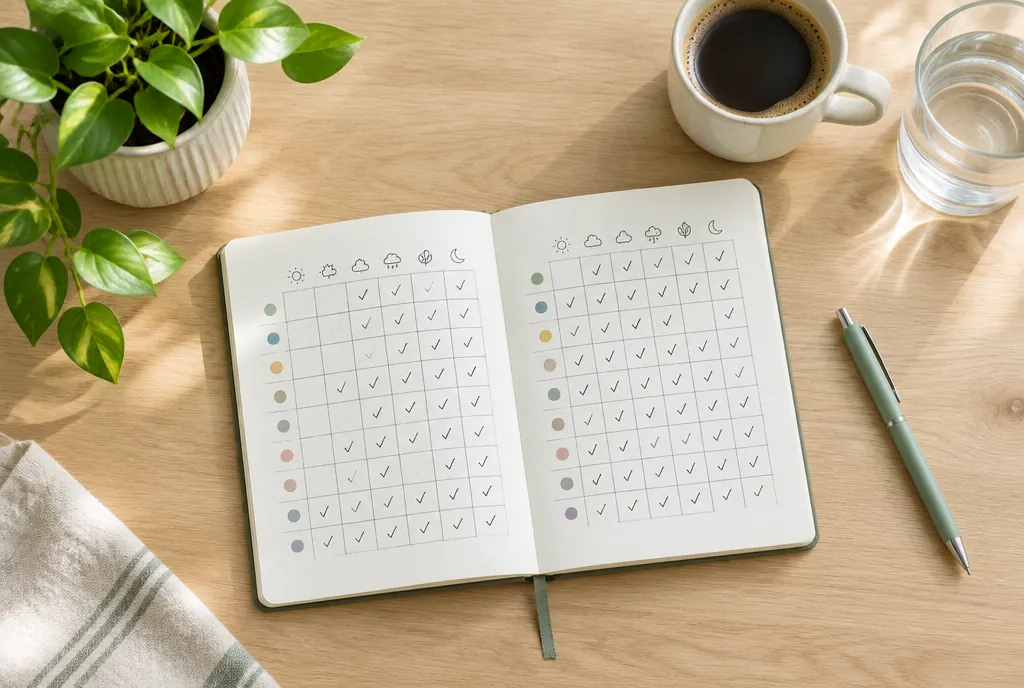
- Track it simply. The research group suggests a basic tick sheet to record each day you do the action. Seeing a run of ticks can be motivating.
- Expect it to get easier. Early on, the habit will need some thought. Over the weeks it usually starts to feel more natural.
- Change your surroundings. Keep fruit on the counter, put walking shoes by the door, or leave a water bottle on your desk, so the easy choice is the visible one.
- Work on one habit at a time. Focusing on a single change makes it easier to repeat it consistently.
Be patient and kind to yourself
Habit formation is gradual, and everyone's timeline is different. If something feels hard after a couple of weeks, that is normal, not a sign you are doing it wrong. Consider making the action even smaller or choosing a more reliable cue.
If you are trying to change habits because of a health condition, such as diabetes, heart disease or a recent diagnosis, it is worth talking with your doctor or a registered dietitian. They can help you choose changes that fit your situation, and you can then use the same small-steps approach to make them stick.
Frequently asked questions
Does it really take 66 days to form a habit?
Around 66 days was an average, not a rule. In the original study, the time to reach a plateau in automaticity ranged from 18 to 254 days depending on the person and the behavior.
What should I do if I miss a day?
Just pick up again at the next opportunity. In the research, missing one opportunity did not materially affect how the habit formed.
How many habits should I work on at once?
Starting with one small, specific habit is usually easiest, because it lets you repeat it consistently in the same situation.
This article is general education, not personal medical advice. If you have a health condition or take medication, check with a doctor or registered dietitian before making big changes. Health disclaimer
Sources
- European Journal of Social Psychology — Lally et al. (2010), How are habits formed: Modelling habit formation in the rea doi.org
- British Journal of General Practice (PMC) — Gardner, Lally & Wardle (2012), Making health habitual: the psychology of 'h pmc.ncbi.nlm.nih.gov
We link to health institutions, published guidelines and original research. See our editorial policy.
Recipes
Put it on your plate
-
Dinner
-
Dinner
-
Snacks
-
Dinner