How Carbohydrates Affect Blood Sugar: A Plain-Language Guide
Learn how your body turns carbs into glucose, what insulin does, and why fiber, protein and fat change how fast blood sugar rises after a meal.
 AI image
Carbohydrates often get a confusing reputation. Some people hear that carbs are "bad," others that they are essential fuel. The truth is calmer and more useful: carbs are a normal part of eating, and understanding how they affect blood sugar can help you build meals that feel steady and satisfying.
This article explains the basics in plain language. It is general information, not personal medical advice.
What happens when you eat carbohydrates
According to the CDC, your body breaks down most of the food you eat into sugar (glucose) and releases it into your bloodstream. Carbohydrates are the nutrient that has the most direct effect here. The National Institute of Diabetes and Digestive and Kidney Diseases (NIDDK) puts it simply: your body turns carbs from food into glucose, which can raise your blood glucose level.
The American Diabetes Association (ADA) describes three main types of carbohydrates in food:
- Starches, found in foods like bread, rice, potatoes, corn and beans
- Sugars, found naturally in fruit and milk, and added to many sweets and drinks
- Fiber, found in vegetables, fruit, whole grains, beans and lentils
On a Nutrition Facts label, "Total Carbohydrate" includes all three.
Insulin: the key that opens the door
When blood sugar goes up, the pancreas releases a hormone called insulin. The CDC describes insulin as acting like a key that lets blood sugar into your body's cells so they can use it for energy.
In most people, this system works quietly in the background. With diabetes, the CDC explains, the body either doesn't make enough insulin or can't use it as well as it should. When that happens, more glucose stays in the blood. Over time, consistently high blood sugar can damage the heart, eyes and kidneys, which is why managing it matters.
Why the same amount of carbs can act differently
Not every carbohydrate-containing food affects blood sugar the same way. The CDC notes that how fast blood sugar rises depends on the food and on what you eat it with. A few factors make a real difference.
Fiber slows things down
Harvard's Nutrition Source explains that high-fiber foods contain less digestible carbohydrate, so they are digested more slowly and tend to cause a lower, more gradual rise in blood sugar. The ADA points out that non-starchy vegetables have a lot of fiber and very little carbohydrate, so they have a smaller effect on blood glucose.
Protein and fat change the pace
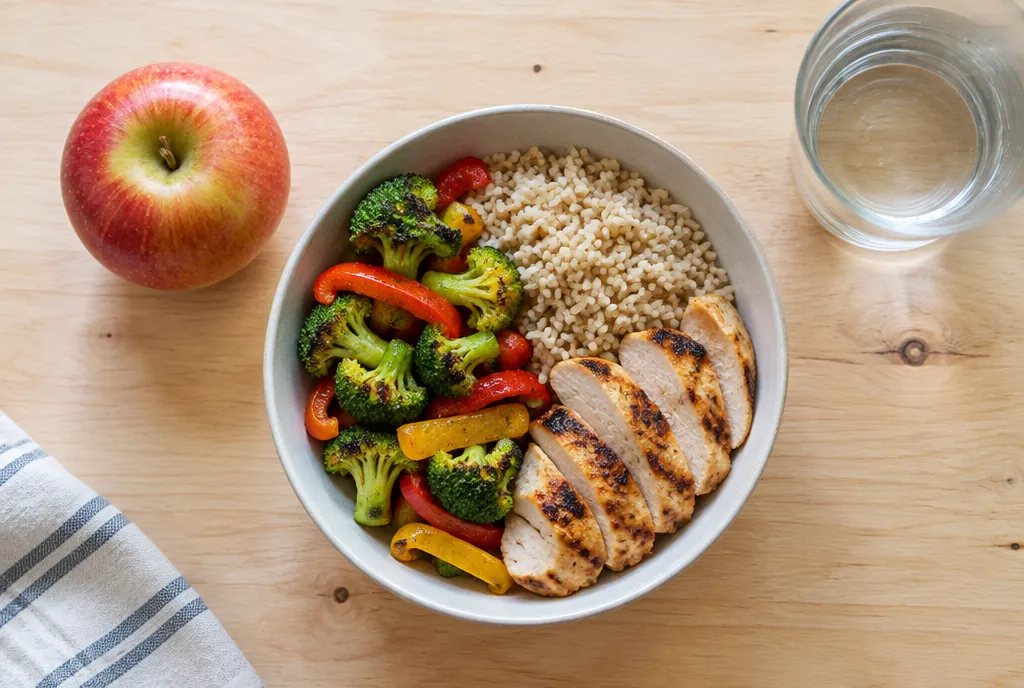
The CDC says that eating carbs with protein, fat or fiber slows down how quickly your blood sugar rises. That is one reason a balanced plate, for example vegetables, a protein food and a moderate portion of whole grains, tends to work better than a large serving of carbs on its own.
Form and processing matter
The CDC gives a clear example: drinking fruit juice raises blood sugar faster than eating whole fruit. Harvard's Nutrition Source adds that refined grains, which have had the bran and germ removed, tend to raise blood sugar faster than minimally processed whole grains, and that finely ground grain is digested more quickly than coarsely ground grain. Ripeness plays a role too: riper fruit generally has a higher glycemic index than less ripe fruit.
Carb quality: a practical way to think about it
Rather than cutting carbs out, many health organizations focus on choosing better-quality carbs. The ADA's general guidance groups foods roughly like this:
- Enjoy freely: non-starchy vegetables such as leafy greens, broccoli, peppers and green beans
- Enjoy in moderation: whole fruit, whole grains, starchy vegetables and beans
- Have less often: refined grains, sugary drinks and sweets
The NIDDK also notes that you don't have to give up favorite foods entirely. You can enjoy them in smaller portions or less often.
Simple habits that support steadier blood sugar
These everyday ideas come straight from the guidance above:
- Pair your carbs. Add a protein food or some healthy fat to a carb-based snack, for example an apple with a handful of nuts.
- Choose whole over juiced. Eat whole fruit more often than fruit juice.
- Lean on fiber. Fill more of your plate with non-starchy vegetables and choose whole grains and beans when you can.
- Keep portions steady. The CDC notes that, for people managing diabetes, eating about the same amount of carbs at each meal can help.
- Swap sugary drinks for water. It is one of the simplest changes with a meaningful effect.
When to talk to your care team
Everyone's needs are different. If you have diabetes or prediabetes, the right amount of carbohydrate for you depends on your health, your activity, and any medicines you take. The CDC suggests working with a doctor or registered dietitian to find your target amount of carbs.
Talk to your doctor or diabetes care team if:
- You take insulin or other diabetes medicines and want to change how you eat. The NIDDK notes that counting carbs can help people who take insulin know how much insulin to take, so changes in eating should be planned together.
- You often feel shaky, sweaty or confused, or very thirsty and tired, which can be signs of low or high blood sugar.
- You are thinking about a very low-carb or other restrictive eating pattern.
Please don't change or stop any medication on your own. Talk to your doctor before making changes.
The bottom line
Carbohydrates turn into glucose, and insulin helps move that glucose into your cells. Fiber, protein, fat, and the form of the food all change how fast that happens. Focusing on carb quality and balanced meals, rather than fear of carbs, is a realistic, sustainable way to support steadier blood sugar.
Frequently asked questions
Do I need to stop eating carbs to manage blood sugar?
No. Health organizations such as the ADA focus on carb quality and balance rather than cutting carbs out. Non-starchy vegetables, whole fruit, whole grains and beans can all fit. If you have diabetes, your care team can help you find the amount that suits you.
Why does juice raise blood sugar faster than fruit?
The CDC notes that drinking fruit juice raises blood sugar faster than eating whole fruit. Whole fruit keeps its fiber, which slows digestion.
Is fiber counted as a carbohydrate?
Yes. The ADA lists fiber as one of the three main types of carbohydrate, and it is included in "Total Carbohydrate" on food labels. Because it is not easily digested, it has a smaller effect on blood sugar.
This article is general education, not medical advice. It can't diagnose anything or tell you how to change a treatment. If you have diabetes or prediabetes, take medication, are pregnant or have another health condition, talk to your doctor, registered dietitian or diabetes care team before changing how you eat or move. Health disclaimer
Sources
- CDC — About Diabetes cdc.gov
- CDC — Diabetes Meal Planning cdc.gov
- NIDDK — Diabetes Diet, Eating, & Physical Activity niddk.nih.gov
- American Diabetes Association — Understanding Carbs diabetes.org
- Harvard T.H. Chan School of Public Health, The Nutrition Source — Carbohydrates and Blood Sugar nutritionsource.hsph.harvard.edu
We link to health institutions, published guidelines and original research. See our editorial policy.
Recipes
Put it on your plate
-
Dinner
-
Dinner
-
Snacks
-
Dinner