Rolled vs Steel-Cut vs Instant Oats: Which Should You Choose?
How rolled, steel-cut and instant oats differ in processing, cooking time and texture, how each fits a balanced breakfast, and what to check on flavored packs.
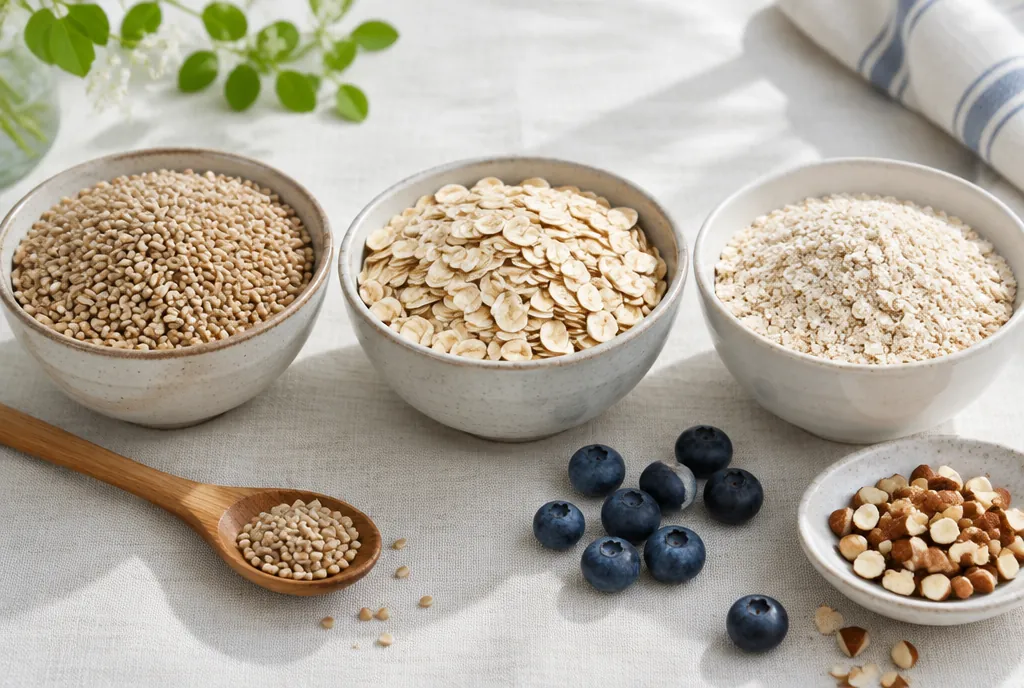 AI image
Side by side
| Criteria | Steel-cut oats | Rolled oats | Instant oats |
|---|---|---|---|
| Processing | Groats cut into 2–3 pieces (least processed) | Steamed, rolled into flakes and dried | Steamed longer and rolled thinner (most processed) |
| Cooking time | About 25–30 minutes | In between; follow package directions | About 1–2 minutes |
| Texture | Chewy, distinct grains | Soft but holds some shape | Soft and smooth |
| Digestion | Generally digested more slowly; lower glycemic index | In between | Higher glycemic load |
| Fit for a balanced breakfast | Great for batch cooking; add fruit, nuts or seeds | Very flexible: porridge, baking, overnight oats | Quick option; choose plain and add your own toppings |
| Added sugar to watch | Check the label on any flavored product | Check the label on any flavored product | Many flavored packets are sweetened; check added sugars |
Oats are one of the easiest whole-grain breakfasts, but the shelf can be confusing. Steel-cut, rolled, quick and instant oats all come from the same grain, yet they cook differently and can affect your breakfast in different ways. Here is a plain comparison to help you choose.
Where all oats start
Every type of oat begins as an oat groat: the whole kernel with the inedible hull removed. The Nutrition Source from Harvard T.H. Chan School of Public Health explains that groats contain the intact germ, endosperm and bran, the three parts that make a grain whole. The Nutrition Source also lists oats among whole grains in their unprocessed form, alongside foods like brown rice and barley.
What changes from one type to the next is how much the groat is processed after that.
Steel-cut oats
According to the Nutrition Source, steel-cut oats are oat groats that have been cut into two or three smaller pieces. They are the least processed of the three types compared here.
- Cooking time: generally 25–30 minutes on the stove.
- Texture: many people find them chewy and nutty, with distinct grains.
- Best for: a slow weekend breakfast, or cooking a larger batch ahead to reheat during the week.
The Nutrition Source also suggests a savory use: toasting steel-cut oats with onion or shallots and cooking them slowly in stock, like a risotto.
Rolled oats
Rolled oats, sometimes called old-fashioned oats, are steamed, rolled and flattened into flakes, then dried. They sit in the middle in terms of processing.
- Cooking time: shorter than steel-cut but longer than instant; the Nutrition Source suggests following package directions for exact times.
- Texture: softer than steel-cut, while still holding some shape.
- Best for: everyday porridge, baking and overnight oats.
The Nutrition Source's overnight oats method specifically calls for old-fashioned or rolled oats rather than instant, soaked in liquid in the fridge overnight or for at least four hours.
Instant oats
Instant oats are steamed for longer and rolled thinner than rolled oats, so they cook very quickly.
- Cooking time: about 1–2 minutes.
- Texture: soft and smooth.
- Best for: very busy mornings, travel and work desks.
The main thing to watch with instant oats is what comes in the packet. The Nutrition Source notes that many brands of instant oats come sweetened or flavored, and suggests checking labels for products with no added sugar.
Digestion and blood sugar
The Nutrition Source explains that steel-cut and instant oats have similar nutrition, but their effects on blood sugar are not the same. Less-processed oats such as steel-cut generally take longer to digest, so they have a lower glycemic index than rolled or instant oats. It describes the glycemic load of steel-cut oats as low to medium, and that of instant oats as high.
In everyday terms, if you want a breakfast that is digested more slowly, steel-cut or rolled oats are a good option. That said, all three types are oats, and what you add to the bowl also shapes the meal as a whole.
If you are managing diabetes or prediabetes, your doctor or a registered dietitian can help you decide which breakfasts work best for you.
Checking flavored packets
Flavored instant oatmeal can be convenient, but it is worth a quick look at the Nutrition Facts label. The FDA lists added sugars among the nutrients to limit, and explains that a %Daily Value of 5% or less per serving is considered low, while 20% or more is considered high. Comparing the added sugars line across a few packets can help you find a less-sweetened option.
Another simple approach is to buy plain instant or rolled oats and add your own flavor with cinnamon, sliced banana, berries or a few chopped nuts.
Building a balanced oat breakfast
Whichever type you choose, a bowl of oats can be the base of a balanced breakfast. The Nutrition Source notes that cooked oats pair well with fruits, nuts and seeds. A few ideas:
- Fruit: berries, sliced apple, pear or banana
- Protein and healthy fats: a spoonful of nut butter, chopped nuts, chia or ground flaxseed, or a side of Greek yogurt
- Flavor without added sugar: cinnamon, nutmeg or vanilla
Adding fruit and a source of protein turns a simple bowl into a more complete meal.
So which should you choose?
There is no single right answer. Steel-cut oats are the least processed and have the lowest glycemic index of the three, but they take the longest to cook. Rolled oats are a flexible middle ground that work for porridge, baking and overnight oats. Instant oats are the quickest, and plain versions can still be part of a balanced breakfast, especially when you check the label for added sugars.
The best oats are the ones that fit your mornings and that you enjoy eating regularly.
Pros and cons
Steel-cut oats
Oat groats cut into a few pieces. The least processed option, with a chewy texture and the longest cooking time.
Pros
- Least processed of the three
- Generally digested more slowly, with a lower glycemic index
- Good for batch cooking and savory dishes
Cons
- Takes about 25–30 minutes to cook
- Not ideal for quick weekday mornings without prep
Rolled oats
Steamed and flattened flakes that cook faster than steel-cut and work in many recipes.
Pros
- Flexible for porridge, baking and overnight oats
- Cooks faster than steel-cut
- Recommended for overnight oats
Cons
- Higher glycemic index than steel-cut oats
- Softer texture than steel-cut
Instant oats
Thin, pre-steamed flakes that are ready in about 1–2 minutes.
Pros
- Very quick and convenient
- Easy to take to work or when traveling
Cons
- Higher glycemic load than less-processed oats
- Many flavored packets contain added sugars
Frequently asked questions
Are steel-cut oats healthier than rolled oats?
They have similar nutrition, but steel-cut oats are less processed and generally take longer to digest, so they have a lower glycemic index. Rolled oats are still a whole-grain choice.
Can I use instant oats for overnight oats?
The Harvard Nutrition Source recipe calls for old-fashioned or rolled oats rather than instant, soaked overnight or for at least four hours in the fridge.
How can I tell if flavored oatmeal has a lot of added sugar?
Check the added sugars line on the Nutrition Facts label. The FDA says 5% Daily Value or less per serving is low and 20% or more is high.
This article is general education, not personal medical advice. If you have a health condition or take medication, check with a doctor or registered dietitian before making big changes. Health disclaimer
Sources
- Harvard T.H. Chan School of Public Health, The Nutrition Source — Oats nutritionsource.hsph.harvard.edu
- Harvard T.H. Chan School of Public Health, The Nutrition Source — Whole Grains nutritionsource.hsph.harvard.edu
- FDA — How to Understand and Use the Nutrition Facts Label fda.gov
We link to health institutions, published guidelines and original research. See our editorial policy.
Recipes
Put it on your plate
-
Dinner
-
Dinner
-
Dinner