Fiber: What It Does and How to Get More Every Day
What dietary fiber does, how much adults are advised to eat, the difference between soluble and insoluble fiber, and easy ways to add more without discomfort.
 AI image
Fiber does not get as much attention as protein, but it plays an important role in a balanced diet. Many people eat less of it than recommended, and the good news is that small, steady changes can make a real difference. Here is what fiber does, how much you are advised to eat, and simple ways to add more.
What is fiber?
Dietary fiber is found in plant foods, such as vegetables, fruits, whole grains, beans, lentils, nuts and seeds. The Nutrition Source from Harvard T.H. Chan School of Public Health describes it simply as a type of carbohydrate that the body can't digest. Instead of being absorbed like other carbohydrates, it passes through the digestive system and does useful work along the way.
The Nutrition Source explains that some soluble fibers bind to water and form a gel that helps soften and bulk stool. That gel can also slow digestion, which may help prevent blood glucose surges after eating and reduce hunger, and soluble fiber may help lower blood cholesterol.
Soluble and insoluble fiber
Fiber is often divided into two types. Most plant foods contain a mix of both.
Soluble fiber dissolves in water. According to the Nutrition Source, it can help lower glucose levels and blood cholesterol. Good sources include:
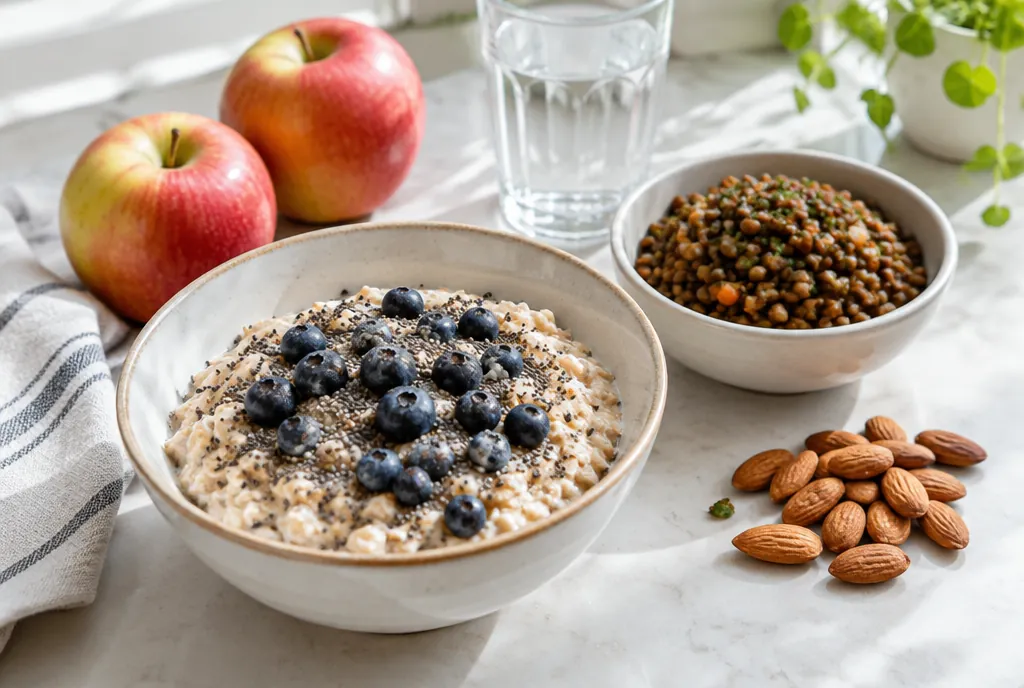
- Oatmeal
- Chia seeds
- Nuts
- Beans and lentils
- Apples and blueberries
Insoluble fiber does not dissolve in water. It can help food move through your digestive system. Good sources include:
- Whole-wheat products, especially wheat bran
- Quinoa and brown rice
- Legumes
- Leafy greens such as kale
- Almonds, walnuts and seeds
- Fruits with edible skins
You do not need to track which type you are eating. Choosing a variety of plant foods will naturally give you both.
How much fiber do you need?
In the United States, the adequate intake for fiber is based on about 14 grams of fiber for every 1,000 calories you eat, a figure used in the nutritional goals that support the Dietary Guidelines for Americans. For someone eating around 2,000 calories a day, that works out to about 28 grams.
That matches the Daily Value for dietary fiber used on U.S. Nutrition Facts labels, which the FDA sets at 28 grams per day. The Harvard Nutrition Source gives a similar range, saying adults need at least 25 to 35 grams a day, and notes that most Americans get only about 15 grams.
The current Dietary Guidelines for Americans, 2025–2030, also encourage prioritizing fiber-rich whole grains over highly processed, refined carbohydrates.
If these numbers feel far from where you are now, that is normal. The aim is to move gradually in the right direction, not to hit a perfect number tomorrow.
Why to increase fiber slowly
It can be tempting to add lots of fiber at once, but the Nutrition Source cautions that a sudden, significant increase can cause bloating and cramping. Your digestive system usually adjusts better when changes are gradual.
A practical approach is to add one higher-fiber food at a time, for example switching to a whole-grain breakfast cereal for a week before making the next change.
Drink enough fluids
Fiber works best with enough fluid. The Nutrition Source notes that drinking more fluids while eating more fiber can help lessen side effects like bloating. Keeping a glass or bottle of water nearby during meals is an easy reminder.
Easy ways to get more fiber
These ideas draw on tips from the Harvard Nutrition Source:
- Eat whole fruit instead of drinking juice. Whole fruit gives you the fiber that a glass of juice does not.
- Pick a whole-grain breakfast. Look for cereals with a whole grain listed first and around 20% or more of the Daily Value for fiber per serving.
- Snack on vegetables or nuts. Try raw carrots, peppers or a small handful of almonds in place of chips or crackers.
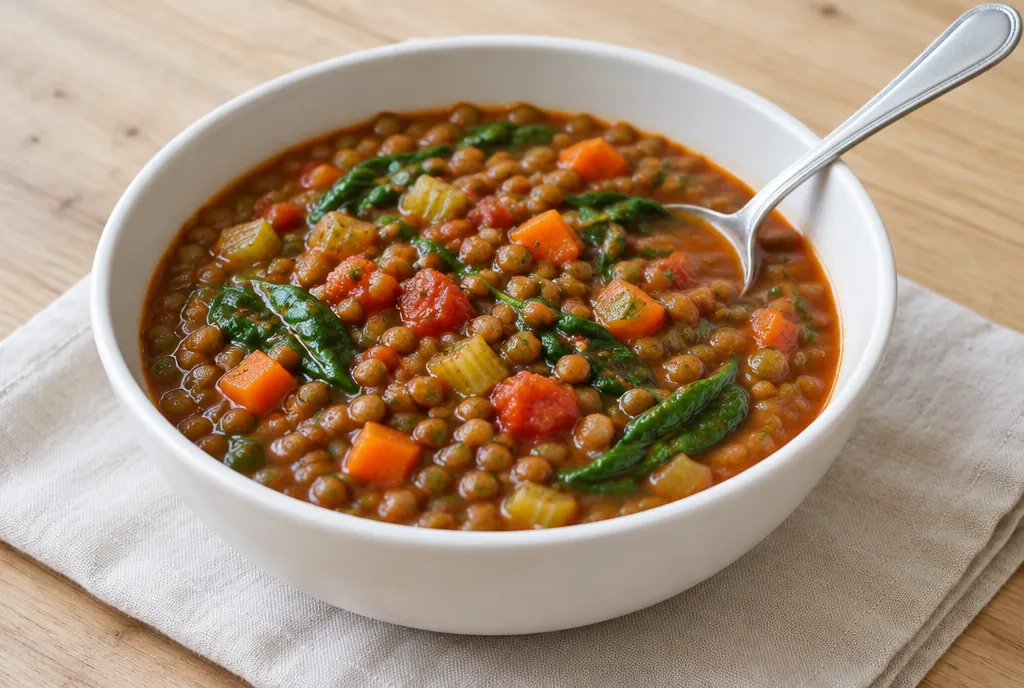
- Use beans and lentils more often. Swap beans or lentils for meat two or three times a week in chili, soups or stews.
- Choose whole grains. Brown rice, whole-wheat pasta, oats, barley and quinoa all add fiber to meals.
- Keep the skins on. Fruits with edible skins, like apples and pears, are a source of insoluble fiber, so there is no need to peel them.
Reading labels for fiber
On a Nutrition Facts label, dietary fiber is listed with a %Daily Value. The FDA explains that 5% DV or less per serving is considered low, and 20% DV or more is considered high. Fiber is one of the nutrients the FDA encourages people to get more of, so a higher %DV for fiber is generally a good sign when comparing similar products.
What about fiber supplements?
Fiber supplements are available, but the Nutrition Source notes that they are not intended to completely replace high-fiber foods. Whole foods offer fiber along with vitamins, minerals and other nutrients. If you are thinking about a supplement, especially if you take medication or have a digestive condition, it is a good idea to check with your doctor or pharmacist first.
When to talk to a professional
The advice here is general information for healthy adults. If you have a digestive condition such as inflammatory bowel disease, have been told to follow a low-fiber or special diet, or notice ongoing changes in your bowel habits, please talk with your doctor or a registered dietitian before making big changes.
For most people, though, adding a little more fiber is a simple, positive step. Start with one change this week, drink enough fluids, and build from there.
Frequently asked questions
How many grams of fiber should I aim for?
U.S. recommendations are based on about 14 grams per 1,000 calories, or roughly 28 grams on a 2,000-calorie diet. The FDA's Daily Value for fiber on food labels is also 28 grams.
Why do I feel bloated when I eat more fiber?
A sudden, large increase in fiber can cause bloating and cramping. Adding fiber gradually and drinking more fluids usually helps.
Can I just take a fiber supplement?
Supplements can help some people, but they are not intended to completely replace high-fiber foods. Check with your doctor or pharmacist first if you take medication.
This article is general education, not personal medical advice. If you have a health condition or take medication, check with a doctor or registered dietitian before making big changes. Health disclaimer
Sources
- Harvard T.H. Chan School of Public Health, The Nutrition Source — Fiber nutritionsource.hsph.harvard.edu
- ODPHP (health.gov) — Dietary Guidelines Advisory Report, Appendix E-3.1 Table A4: Nutritional goals (fiber 14 g/1,000 kc odphp.health.gov
- FDA — Daily Value on the Nutrition and Supplement Facts Labels fda.gov
- FDA — How to Understand and Use the Nutrition Facts Label fda.gov
- U.S. Departments of HHS and USDA — Dietary Guidelines for Americans, 2025–2030 (Eat Real Food) realfood.gov
We link to health institutions, published guidelines and original research. See our editorial policy.
Recipes
Put it on your plate
-
Dinner
-
Snacks
-
Dinner