Weekly Meal Planning in 5 Simple Steps for Busy People
A simple five-step weekly meal plan: check your calendar, pick meals, write a shopping list by store section, batch prep, and store leftovers safely.
 AI image
Meal planning can sound like a big project, but at its heart it is just deciding ahead of time what you will eat. A little planning can make weeknights calmer, help you eat more balanced meals and reduce last-minute takeout or wasted food. This guide breaks it into five practical steps you can adapt to your own schedule.
Why plan your meals?
When you already know what is for dinner, there are fewer decisions to make at the end of a long day. Planning also makes it easier to build meals around vegetables, whole grains and protein, because you can make sure those ingredients are in the kitchen before you need them.
The Nutrition Source from Harvard T.H. Chan School of Public Health suggests choosing one day a week to plan the menu, write your grocery list, shop and do most of your cooking. If that feels like too much for one day, you can split the tasks up, for example planning and shopping on Saturday and cooking on Sunday.
Start small
You do not need to plan every meal and snack right away. The Nutrition Source suggests aiming to make enough dinners for 2 to 3 days of the week as a starting point. Once that feels comfortable, you can add more days, or plan lunches as well.
Keeping a running list of meal ideas, favorite recipes and past shopping lists also helps. Over time you will build a collection of reliable meals you can rotate, which makes planning faster each week.
Building balanced meals into your plan
As you choose meals, a simple plate approach can help: about half vegetables and fruit, a quarter whole grains and a quarter protein. It does not need to be exact, but checking each planned dinner against this idea is an easy way to keep the week balanced.
Shelf-stable staples make this easier. The Nutrition Source suggests stocking up on items such as pasta, rice and other whole grains, lentils, canned or dried beans, jarred sauces, healthy oils and spices, especially when they are on sale.
Food safety basics for meal prep
Cooking ahead is only helpful if the food stays safe to eat. A few key points from the CDC:
- Refrigerate cooked leftovers within 2 hours of cooking, or within 1 hour if the food has been somewhere above 90°F, such as a hot car or a picnic.
- Keep your refrigerator at 40°F or below and your freezer at 0°F or below.
- Divide warm or hot food into several clean, shallow containers before refrigerating so it chills faster.
- Eat refrigerated leftovers within 3 to 4 days, and throw them out after that.
Some foods keep for less time. The Harvard Nutrition Source's storage guide, for example, lists cooked ground poultry and ground beef at 1 to 2 days in the refrigerator, compared with 3 to 4 days for cooked whole meats, fish, poultry, soups and stews. If you will not eat something within that window, freezing it is a good option.
An example week
Here is what a simple first plan might look like for a household that cooks three dinners and relies on leftovers for the rest:
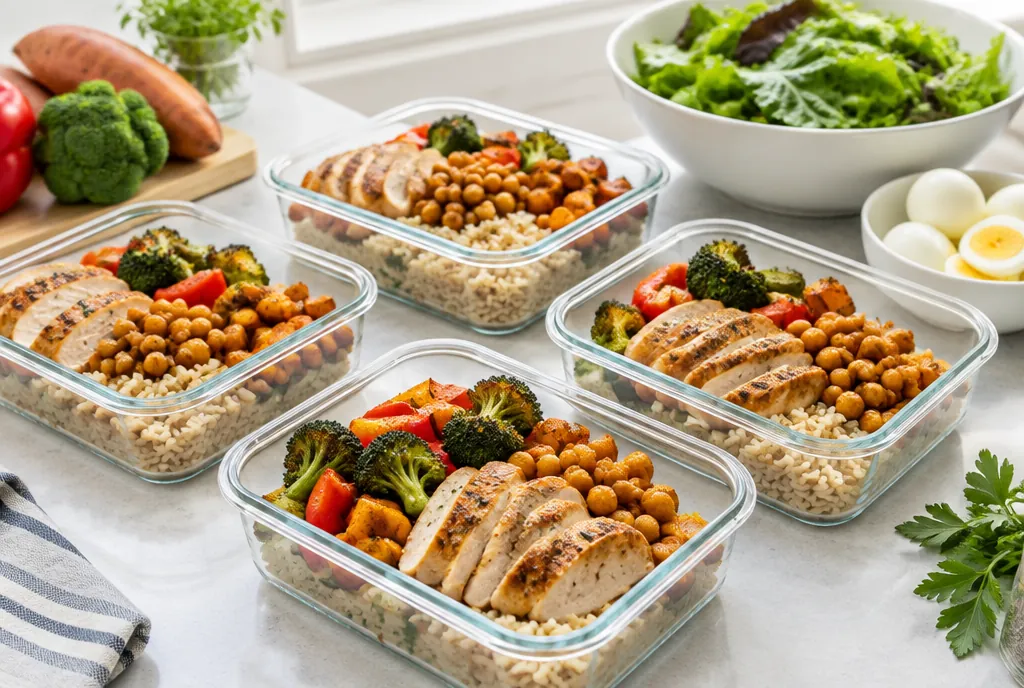
- Sunday: batch-cook a pot of brown rice, roast a large tray of mixed vegetables and bake some chicken or tofu. Make a big pot of lentil soup.
- Monday: chicken or tofu with roasted vegetables and brown rice.
- Tuesday: lentil soup with whole-grain bread and a side salad.
- Wednesday: a busy night, so leftovers from Monday or Tuesday.
- Thursday: a quick fresh meal, such as a bean and vegetable stir-fry over the remaining rice.
- Friday: a fresh, simple meal such as a vegetable omelet with whole-grain toast, or a frozen portion of soup you saved earlier.
Notice that the food cooked on Sunday is eaten by Wednesday or Thursday, within the 3 to 4 day window. Portions you know you will not get to, such as extra soup, go into the freezer on prep day rather than staying in the fridge.
Make it your own
There is no single right way to meal plan. Some people plan a full week; others plan three dinners and keep the rest flexible. Some cook everything on one day; others prepare a few components, like a pot of grains and a tray of roasted vegetables, and mix and match. Try a simple version first, notice what works for your household, and adjust from there.
If you are planning meals around a health condition, food allergy or a specific diet from your doctor, a registered dietitian can help you create a plan that suits your needs.
Step by step
- 1
Check your calendar for the week
Look at the week ahead before choosing any meals. Note busy evenings, late workdays, social plans and nights when you will have more time. Plan quick meals or leftovers for the busiest days, and save new or longer recipes for calmer ones.
- 2
Pick your meals
Start with dinners for 2–3 days, as the Harvard Nutrition Source suggests, then add more as you get comfortable. Aim for each meal to include vegetables, a whole grain and a protein. Ask the people you live with what they like, and keep a running list of favorite meals to choose from.
- 3
Write a shopping list by store section
Check what you already have in the fridge, freezer and cupboards, then list what you need. Group items by store section, such as produce, bakery, dairy and eggs, meat and fish, canned and dry goods, and frozen foods, so you can move through the store once. Stock up on shelf-stable staples like whole grains, beans, lentils and spices when they are on sale.
- 4
Batch prep on one day
Start with the foods that take longest to cook, such as chicken or fish, whole grains, dried beans and roasted vegetables. Prepare grab-and-go items like washed greens, hard-boiled eggs, chopped fruit and cooked beans. Make extra portions of a recipe for another day or for the freezer, and label prepped items with the date.
- 5
Plan for leftovers and store them safely
Divide hot food into clean, shallow containers and refrigerate within 2 hours (1 hour if it was above 90°F). Keep the fridge at 40°F or below. Eat leftovers within 3 to 4 days, or freeze portions you will not use in time. Put the oldest food at the front so it gets eaten first.
Frequently asked questions
How many meals should I plan when I am just starting?
Start small. The Harvard Nutrition Source suggests aiming for enough dinners for 2 to 3 days of the week, then building from there.
How long can I keep leftovers in the fridge?
The CDC advises eating leftovers within 3 to 4 days. Some foods, such as cooked ground meat, keep for less time, so freeze anything you will not eat soon.
Do I have to cook everything on one day?
No. You can split planning, shopping and cooking across different days, or prepare just a few components to mix and match during the week.
This article is general education, not personal medical advice. If you have a health condition or take medication, check with a doctor or registered dietitian before making big changes. Health disclaimer
Sources
- Harvard T.H. Chan School of Public Health, The Nutrition Source — Meal Prep: A Guide nutritionsource.hsph.harvard.edu
- CDC — Preventing Food Poisoning cdc.gov
- CDC — Food Safety Tips for Dining Out cdc.gov
- Harvard T.H. Chan School of Public Health, The Nutrition Source — Healthy Eating Plate nutritionsource.hsph.harvard.edu
We link to health institutions, published guidelines and original research. See our editorial policy.
Recipes
Put it on your plate
-
Dinner
-
Snacks