Protein: How Much You Need and the Best Places to Get It
How much protein adults need, how to work out your own number from body weight, what current guidelines suggest, and simple food sources to build meals around.
 AI image
Protein is one of the most talked-about nutrients, and it can be hard to know how much you really need. Some messages suggest we should eat as much as possible; others say most people already get plenty. This article explains the main guidelines, how to estimate your own needs, and how to choose protein foods that fit a balanced diet.
What protein does
Protein is found throughout the body, in muscle, bone, skin, hair and virtually every other tissue. It is made of building blocks called amino acids. The body can make some of these, but nine of them, known as essential amino acids, need to come from food.
The Nutrition Source from Harvard T.H. Chan School of Public Health explains that animal-based foods tend to be good sources of complete protein, meaning they provide all the essential amino acids. Plant-based foods often lack one or more essential amino acid, but people who eat mainly plants can still get everything they need by eating a variety of protein-containing plant foods each day.
The RDA: 0.8 grams per kilogram
The Recommended Dietary Allowance (RDA) for protein, set by the National Academy of Medicine, is 0.8 grams of protein for every kilogram of body weight per day for adults. The Harvard Nutrition Source translates this into everyday terms: just over 7 grams for every 20 pounds of body weight.
That gives some simple examples from the same source:
- A person who weighs 140 pounds would need about 50 grams of protein a day.
- A person who weighs 200 pounds would need about 70 grams a day.
The Nutrition Source describes this as a minimum for adults rather than an upper limit. It also notes that many people in the U.S. already eat more than enough protein, especially from animal foods, and that protein deficiency is uncommon among healthy U.S. adults.
What the 2025–2030 Dietary Guidelines say
The Dietary Guidelines for Americans, 2025–2030, take a different emphasis. Their summary sets a protein target of 1.2–1.6 grams of protein per kilogram of body weight per day, and says every meal should prioritize high-quality, nutrient-dense protein from both animal and plant sources.
So, depending on which guideline you look at, the suggested amount varies. One practical way to read this is that 0.8 g/kg is a minimum, while the newer guidelines encourage more and suggest including a protein food at each meal.
How to estimate your own needs
To work out a rough figure:
- Convert your weight to kilograms by dividing pounds by 2.2.
- Multiply by 0.8 to find the RDA amount.
- If you want to compare with the 2025–2030 target, multiply your weight in kilograms by 1.2 and by 1.6 to see that range.
The Harvard Nutrition Source points out that individual needs vary based on factors such as age, exercise level, health conditions and overall dietary pattern. If you are unsure what is right for you, a registered dietitian can help.
The protein package matters
When you choose a protein food, you also get everything else that comes with it, such as fats, fiber and sodium. The Harvard Nutrition Source calls this the protein package and says it is this package that is likely to make a difference for health. In other words, the source of your protein matters at least as much as the amount.
The Nutrition Source suggests:
- Choose most often: fish, poultry, beans and nuts
- Eggs can be a good choice
- Limit: red meat and cheese
- Avoid: bacon, cold cuts and other processed meats
Its top-line advice is to get your protein from plants when possible.
Good sources of protein
Here are everyday foods that can help you include protein in meals and snacks:
Plant sources
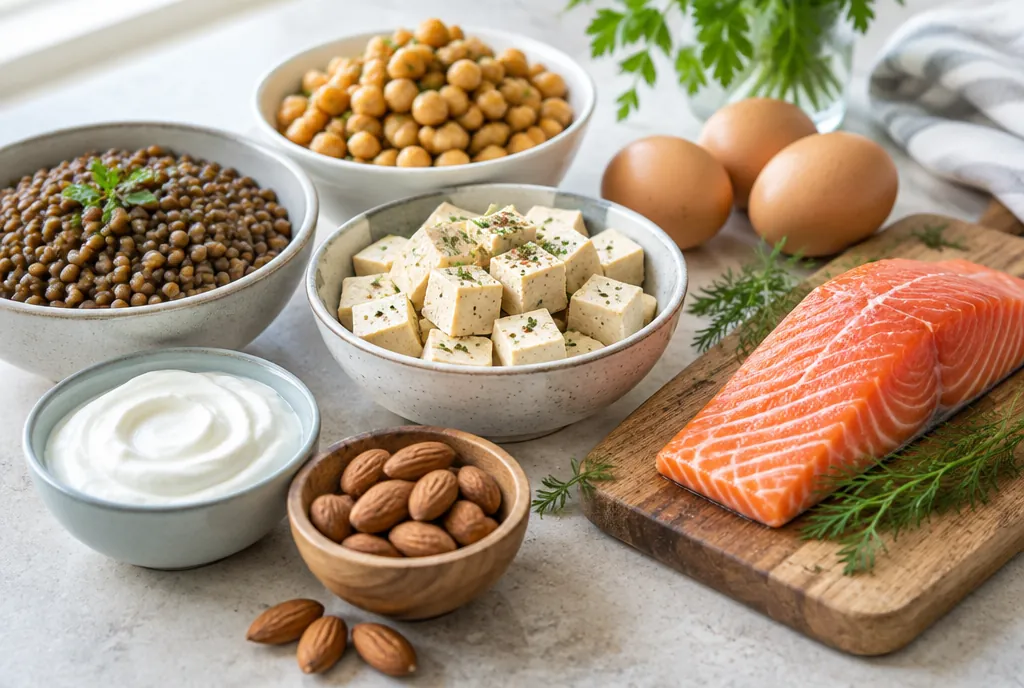
- Beans, lentils and chickpeas
- Tofu and tempeh
- Nuts and seeds, and nut butters
- Whole grains such as quinoa and oats, which also contribute some protein
Animal sources
- Fish and seafood
- Chicken and turkey
- Eggs
- Dairy foods such as milk and yogurt
Mixing plant and animal sources across the week gives you variety and helps you get the benefits of each.
Including protein at meals
Because the 2025–2030 Dietary Guidelines encourage a protein food at every meal, it can help to think meal by meal rather than only about a daily total. A few ideas:
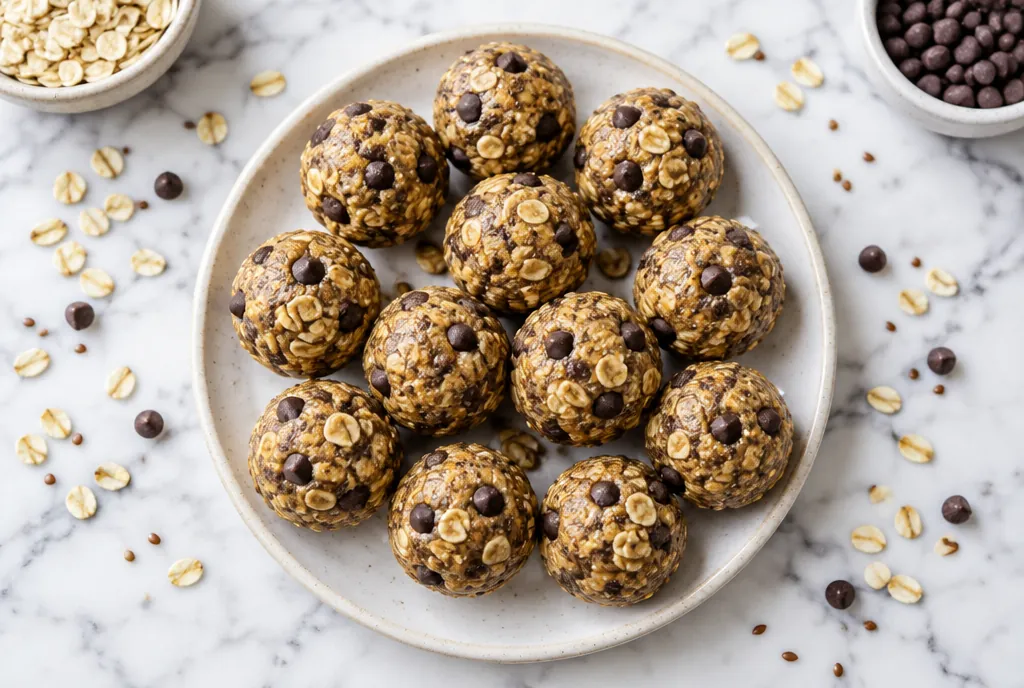
- Breakfast: eggs on whole-grain toast, Greek yogurt with fruit and nuts, or oatmeal with a spoonful of nut butter.
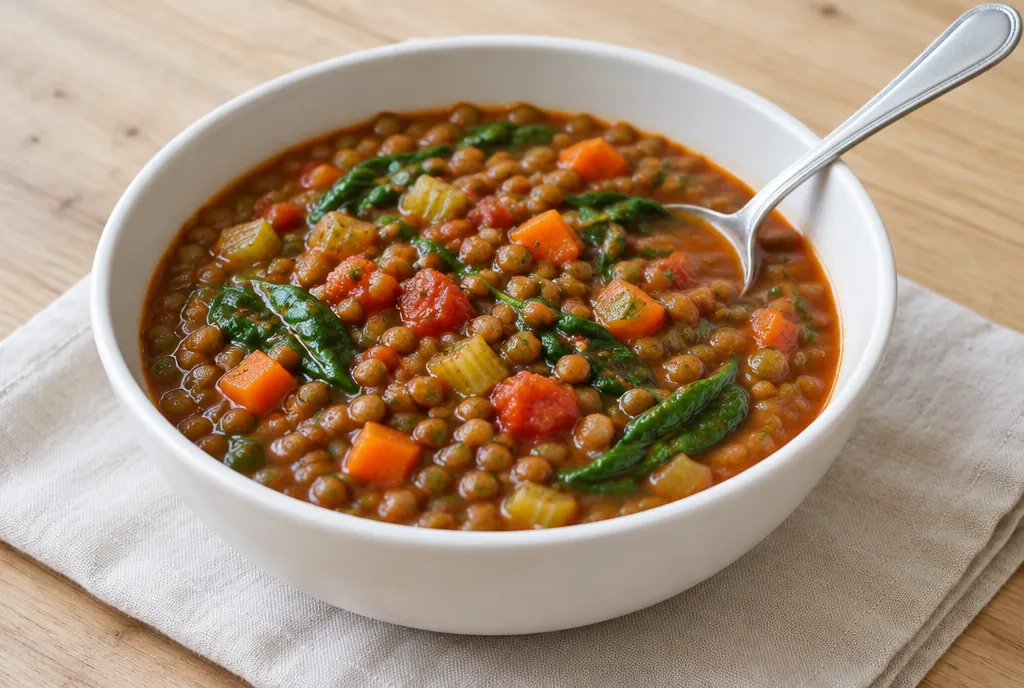
- Lunch: a grain bowl with chickpeas or chicken, or lentil soup with a side salad.
- Dinner: baked fish, tofu stir-fry or a bean chili with plenty of vegetables.
- Snacks: a handful of nuts, hummus with vegetables, or a pot of yogurt.
On a balanced plate, protein usually takes up about a quarter of the plate, with vegetables and fruit filling half and whole grains the remaining quarter.
When to talk to a professional
This is general information for healthy adults. If you have kidney disease or another health condition, are pregnant or breastfeeding, are recovering from illness, or are considering a very high-protein diet or protein supplements, please talk with your doctor or a registered dietitian. They can help you find an amount and type of protein that suits your situation.
For most people, a simple approach works well: include a good-quality protein food at each meal, lean toward plant sources, fish and poultry, and build the rest of the plate around vegetables, fruit and whole grains.
Frequently asked questions
How do I calculate my protein needs?
Divide your weight in pounds by 2.2 to get kilograms, then multiply by 0.8 for the RDA. For example, a 140-pound person needs about 50 grams a day at the RDA level.
Why do different guidelines give different protein numbers?
The RDA of 0.8 g/kg is described as a minimum for adults, while the Dietary Guidelines for Americans, 2025–2030, set a higher target of 1.2–1.6 g/kg. Individual needs vary, so a dietitian can help if you are unsure.
Can I get enough protein without eating meat?
Yes. Eating a variety of protein-containing plant foods each day, such as beans, lentils, tofu, nuts, seeds and whole grains, can provide all the essential amino acids.
This article is general education, not personal medical advice. If you have a health condition or take medication, check with a doctor or registered dietitian before making big changes. Health disclaimer
Sources
- Harvard T.H. Chan School of Public Health, The Nutrition Source — Protein nutritionsource.hsph.harvard.edu
- U.S. Departments of HHS and USDA — Dietary Guidelines for Americans, 2025–2030 (Eat Real Food) realfood.gov
- Harvard T.H. Chan School of Public Health, The Nutrition Source — Healthy Eating Plate nutritionsource.hsph.harvard.edu
We link to health institutions, published guidelines and original research. See our editorial policy.
Recipes
Put it on your plate
-
Snacks
-
Dinner